FIVE THINGS TO KNOW…

Short explainers published throughout the day.

1:18 PM7-minute read

ABOUT THE NEW SWS POVERTY NUMBERS

Self-rated poverty and food poverty declined in June, but the figures also show how many Filipino families remain under pressure and why lower household budgets do not necessarily mean life became cheaper.

Read the explainer →
2:02 PM11-minute read

ABOUT THE CHILDREN'S SOCIAL MEDIA SAFETY ACT

House Bill No. 9965 would bar children below 13 from having social media accounts, require parental consent for users aged 13 to 17, regulate platform algorithms, and impose fines reaching P50 million. It is still being deliberated in the House.

Read the explainer →
12:02 PM7-minute read

ABOUT THE SEALED BIR BOX

Marcos authorized the BIR to comply with the Senate subpoena. That did not open the records to the public or prove the unexplained-wealth allegation.

Read the explainer →

MCT READER PULSE · MCT-PULSE-2026-007

MCT READER SURVEY

House prosecutors are considering whether to stop presenting evidence on the bribery article against Vice President Sara Duterte and move directly to the unexplained-wealth charge. Do you agree with that strategy?Pinag-iisipan ng mga prosekutor ng Kamara kung ititigil ang paghaharap ng ebidensiya sa artikulo tungkol sa panunuhol at tututok sa kasong hindi maipaliwanag na yaman laban kay Bise Presidente Sara Duterte. Sang-ayon ka ba sa estratehiyang ito?

Some prosecutors want to move directly to the unexplained-wealth charge; others want to proceed with all four articles. No final decision had been announced when this survey opened. The question is about prosecution strategy, not guilt.

Background: The Philippine Star and Daily Tribune.

This is an informal survey of verified MCT readers who choose to participate. It is not nationally representative.

Open the shareable survey page →
View previous survey results →
Checking your reader session…

August 14, 2026 · 7:15 PM7-minute read

FIVE THINGS TO KNOW ABOUT TEACHING THE WEST PHILIPPINE SEA IN SCHOOLS

Two Senate proposals would make lessons about the West Philippine Sea a permanent part of school education.

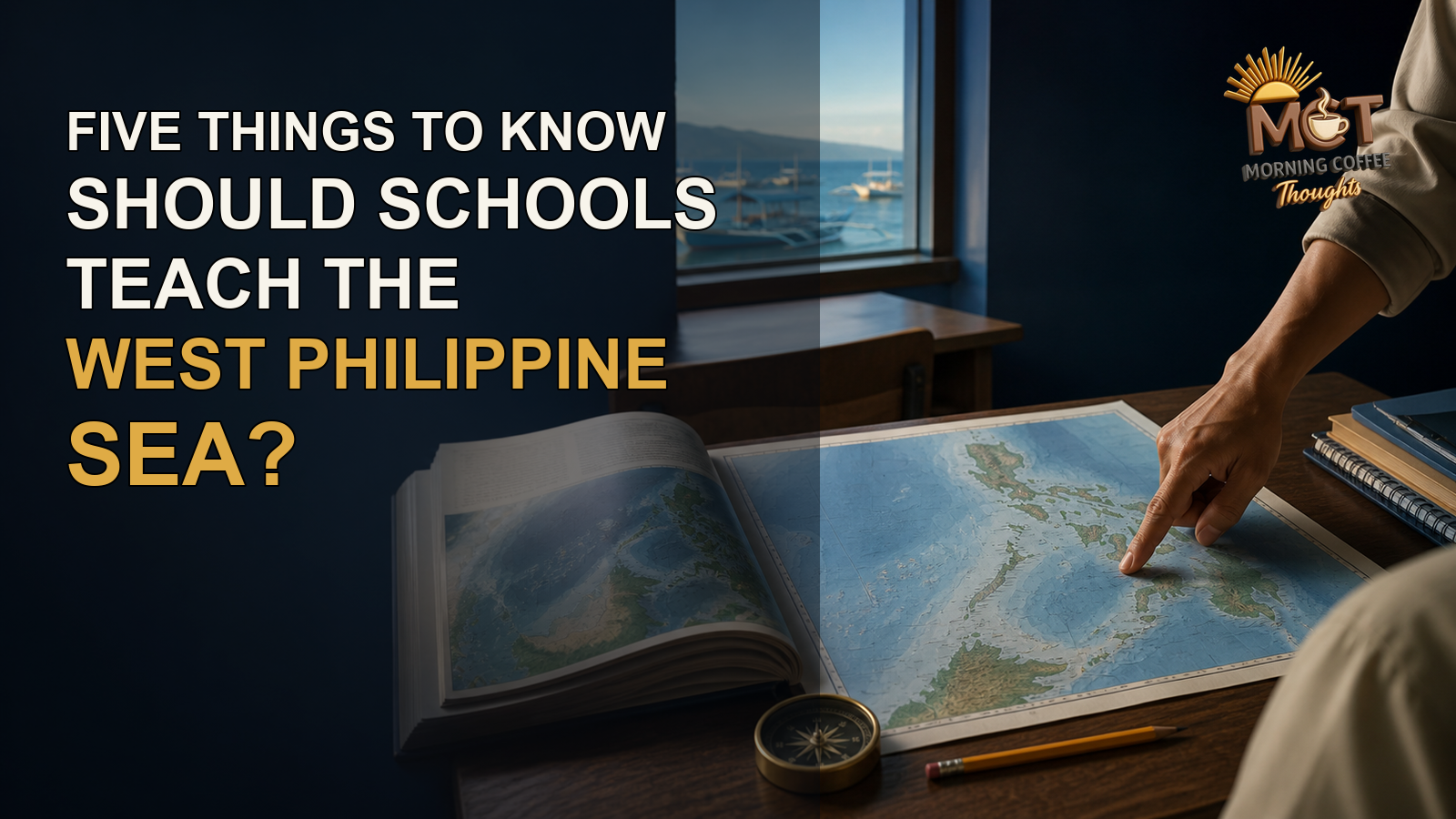
MCT cover showing a classroom map, textbook, compass, and fishing boats for an explainer about West Philippine Sea education

Almost every day, Filipinos see news about Chinese ships, Filipino fishermen, and confrontations in the West Philippine Sea. But many people still do not know which waters belong to the Philippines, what Filipinos have the right to do there, or what the 2016 international ruling actually decided.

Two senators want schools to teach these questions clearly. Senator Risa Hontiveros filed Senate Bill No. 577, while Senator Jinggoy Estrada filed Senate Bill No. 1424.

Their proposals would add lessons about the West Philippine Sea to public and private schools. Students would learn about its history, the laws covering the area, its natural resources, and the experiences of Filipino fishermen.

Some schools have already started teaching parts of the subject. The proposals would make sure the lessons continue nationwide, even when the people running DepEd change.

Here are five things to know.

1

THE PROPOSALS WOULD MAKE SCHOOLS TEACH THE WEST PHILIPPINE SEA

Senate Bill No. 577 would cover public and private educational institutions. Senate Bill No. 1424 would cover public and private primary and secondary schools and give DepEd the main responsibility for carrying it out.

Both proposals are still pending in the Senate Committee on Basic Education. Neither has passed the Senate or the House. Neither is a law.

If one becomes law, lessons about the West Philippine Sea would no longer depend only on occasional seminars or the preference of the current DepEd leadership.

This does not automatically mean schools would add a new subject or extend class hours. DepEd could include the lessons in Araling Panlipunan, history, geography, social science, environmental studies, or related subjects.

WHAT TO WATCH

Watch whether the Senate combines the two proposals and clearly identifies the grade levels, subjects, teaching time, and teacher training required.

2

STUDENTS WOULD LEARN THAT NOT EVERY PART OF THE SEA HAS THE SAME LEGAL STATUS

A common mistake is to treat every part of the West Philippine Sea as if the same legal rules apply everywhere.

The Philippines has sovereignty over its territory and territorial sea. Farther from shore, it has sovereign rights inside its exclusive economic zone, or EEZ. These rights allow the country to explore, use, protect, and manage natural resources such as fish, oil, and gas.

Sovereign rights over resources are different from ownership of territory. This difference explains why fishing, oil exploration, navigation, and ownership of islands can involve separate legal questions.

Senate Bill No. 1424 calls for lessons on the EEZ, the continental shelf, the United Nations Convention on the Law of the Sea, and Philippine maritime laws. Students who understand these terms will be better able to judge claims made by government officials, foreign governments, and social media posts.

WHAT TO WATCH

Watch the maps and teaching materials. They should clearly explain territory, territorial waters, the EEZ, resource rights, and disputed land features instead of treating the entire area as one simple legal question.

3

STUDENTS WOULD STUDY WHAT THE PHILIPPINES WON IN 2016

Both proposals would require students to learn about the July 12, 2016 ruling issued by an international tribunal under the United Nations Convention on the Law of the Sea.

The tribunal ruled that China had no legal basis to claim historic rights to resources across the large area inside its nine-dash line beyond the rights allowed by the convention. It also found that China had violated Philippine sovereign rights in the country’s EEZ, including by interfering with fishing and oil exploration.

The ruling did not decide who owns islands or other land territory. It did not give the entire South China Sea to the Philippines. China rejected the decision, and the tribunal had no police or military force to enforce it.

Students need to learn what the ruling decided and what it left unresolved. That can help them understand why the Philippines won an important legal case while confrontations at sea continue.

WHAT TO WATCH

Watch whether the lessons quote and explain the actual ruling. Exaggerating what the Philippines won would make students easier to mislead later.

4

THE SUBJECT IS ALSO ABOUT FOOD, JOBS, AND THE ENVIRONMENT

Senate Bill No. 1424 would include traditional fishing grounds, marine resources, environmental damage, food security, sea lanes, and the experiences of Filipino fishermen.

Access to fishing grounds affects how much fishermen catch and earn. Damage to coral reefs can reduce fish populations. Limits on exploration can affect the country’s search for oil and gas. Ships passing through the area carry goods that eventually reach Philippine ports and stores.

Even families living far from the coast can feel the effects through fish prices, energy costs, defense spending, and the taxes used for Coast Guard, Navy, diplomatic, and environmental work.

Students should also learn how to separate a verified event from an allegation, a government statement, an opinion, and an online rumor. Lessons that produce anger without teaching evidence would leave them poorly prepared to judge the next incident.

WHAT TO WATCH

Watch whether fishermen, marine scientists, historians, lawyers, and teachers help prepare the lessons. Their participation can keep the material tied to real livelihoods and reliable evidence.

5

SOME SCHOOLS HAVE ALREADY STARTED TEACHING THE SUBJECT

DepEd had already announced plans to include West Philippine Sea issues in selected grade levels before Senator Estrada filed Senate Bill No. 1424. Regional offices have issued instructions supporting lessons in Araling Panlipunan and social science.

DepEd also held activities in 2026 for teachers and students. These included documentary screenings and workshops about the law of the sea, the 2016 ruling, and the Philippine position.

Schools do not have to wait for Congress before teaching the subject. The pending bills did not create every West Philippine Sea lesson already being used.

A national law could make the requirement consistent across the country, require age-appropriate materials, provide maps and documents to school libraries, support teacher training, and keep the lessons in place after officials change.

WHAT TO WATCH

Watch for DepEd curriculum guides, sample lessons, teacher training records, and the actual material given to students. These will show whether schools are teaching the subject carefully or simply repeating slogans.

BOTTOM LINE

Teaching the West Philippine Sea can help young Filipinos understand an issue that affects fishing, food, energy, national security, and the country’s relationship with China. Students should learn more than the statement that the West Philippine Sea is ours. They need to know what the Philippines controls, what rights it has over resources, what remains disputed, what the 2016 ruling decided, and why confrontations continue. The two Senate proposals are still pending. DepEd has already begun teaching parts of the subject. The next question is whether schools will receive accurate materials and properly trained teachers. If the lessons are reduced to slogans, students may remember what to say without understanding why it is true.

GOOGLE PREFERRED SOURCES

FOLLOW MCT ON GOOGLE

Google’s Preferred Sources feature lets you choose publications you want Google to prioritize for you. Select “Add to Preferred Sources” to make MCT easier to find in Top Stories and other eligible Google results. This does not subscribe you to email.

← Back to MCT home

LATEST COMMENTARY

View all commentary →

SUPPORT MCT

HELP KEEP INDEPENDENT POLITICAL WRITING GOING.

Morning Coffee Thoughts is reader-supported. Contributions help pay for research tools, hosting, and the work required to verify and explain each development.

Choose the monthly support amount you are comfortable with.Continue through PayPal
Send support through GCash or Maya0969 314 4839