FIVE THINGS TO KNOW…

Short explainers published throughout the day.

1:18 PM7-minute read

ABOUT THE NEW SWS POVERTY NUMBERS

Self-rated poverty and food poverty declined in June, but the figures also show how many Filipino families remain under pressure and why lower household budgets do not necessarily mean life became cheaper.

Read the explainer →
2:02 PM11-minute read

ABOUT THE CHILDREN'S SOCIAL MEDIA SAFETY ACT

House Bill No. 9965 would bar children below 13 from having social media accounts, require parental consent for users aged 13 to 17, regulate platform algorithms, and impose fines reaching P50 million. It is still being deliberated in the House.

Read the explainer →
12:02 PM7-minute read

ABOUT THE SEALED BIR BOX

Marcos authorized the BIR to comply with the Senate subpoena. That did not open the records to the public or prove the unexplained-wealth allegation.

Read the explainer →

MCT READER PULSE · MCT-PULSE-2026-007

MCT READER SURVEY

House prosecutors are considering whether to stop presenting evidence on the bribery article against Vice President Sara Duterte and move directly to the unexplained-wealth charge. Do you agree with that strategy?Pinag-iisipan ng mga prosekutor ng Kamara kung ititigil ang paghaharap ng ebidensiya sa artikulo tungkol sa panunuhol at tututok sa kasong hindi maipaliwanag na yaman laban kay Bise Presidente Sara Duterte. Sang-ayon ka ba sa estratehiyang ito?

Some prosecutors want to move directly to the unexplained-wealth charge; others want to proceed with all four articles. No final decision had been announced when this survey opened. The question is about prosecution strategy, not guilt.

Background: The Philippine Star and Daily Tribune.

This is an informal survey of verified MCT readers who choose to participate. It is not nationally representative.

Open the shareable survey page →
View previous survey results →
Checking your reader session…

August 14, 2026 · 8:30 PM7-minute read

FIVE THINGS TO KNOW ABOUT THE PROPOSED KALINGA ACT

The proposal promises faster help when fuel and energy costs rise, but it would also give the President temporary additional powers.

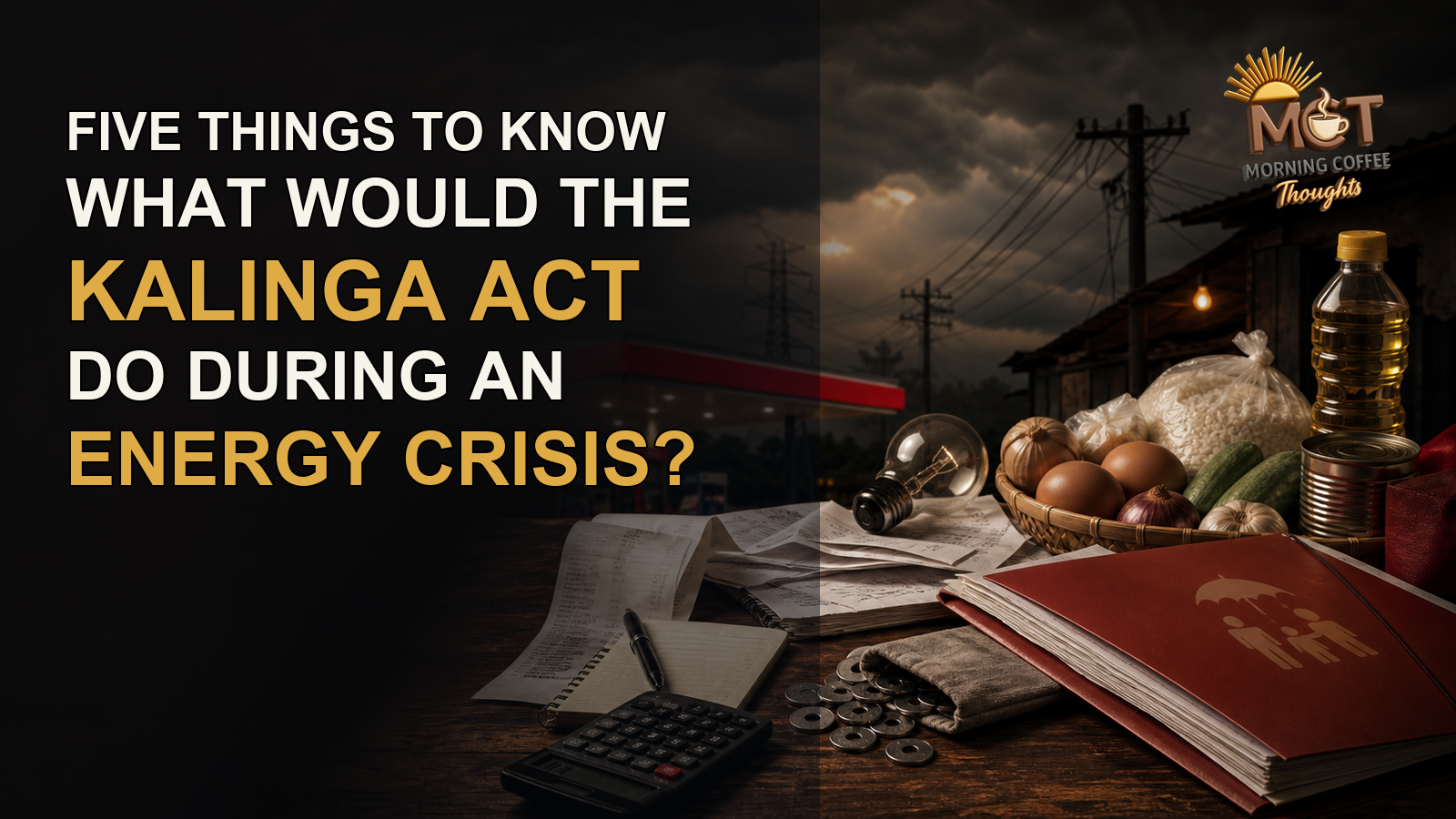
MCT cover showing household bills, food, electricity, fuel, and an assistance folder for an explainer about the proposed KALINGA Act

When fuel prices rise sharply, the effect does not stop at the gasoline station.

Jeepney and bus operators spend more. Farmers and fishermen pay more to run their equipment. Delivery costs rise. Electricity may become more expensive. Stores may pass some of these added costs to their customers.

The House of Representatives has approved a proposal called the KALINGA Act. It is meant to help the government respond faster when a fuel shortage, energy problem, or sudden price increase begins hurting Filipino families.

The proposal includes cash assistance, fuel subsidies, help with electricity bills, food programs, and support for workers and small businesses. It would also give the President temporary additional powers during an emergency.

The Senate has not approved it. The proposal is not yet a law.

Here are five things to know.

1

KALINGA WOULD PREPARE THE GOVERNMENT BEFORE THE NEXT ENERGY CRISIS

KALINGA stands for Komprehensibong Alalay sa Livelihood, Inflation, Negosyo at Goods Assistance.

The proposal would create a system that the government could activate during a serious fuel or energy problem. A council made up of Cabinet officials and economic managers would examine the situation and recommend whether the President should declare a national energy emergency.

The purpose is to avoid starting from zero every time prices suddenly rise. Agencies would already know what help they can provide and who is responsible for delivering it.

For an ordinary family, a faster response could mean receiving assistance before unpaid bills, debt, or skipped meals become worse. The danger is that government records may miss informal workers and low-income families who are among the first to feel a price increase.

WHAT TO WATCH

Watch for the exact conditions that would allow the President to declare an emergency. The public should be able to see why an emergency was declared and which families or industries qualify for help.

2

THE PROPOSAL PROMISES SEVERAL FORMS OF HELP

The House proposal lists cash assistance, fuel subsidies, help with electricity bills, food programs, aid for workers and overseas Filipino workers, support for farmers and fishermen, and relief for small businesses.

A fuel subsidy could help a jeepney driver continue working. Help with electricity could prevent a poor household from being disconnected. Cash assistance could help a family pay for food and transport while prices are high.

These are still promises written into a proposal. The final law and its rules would have to say who qualifies, how much each person receives, how long the help lasts, and which agency will provide it.

A program is useful only when a qualified person knows how to apply and receives the help on time.

WHAT TO WATCH

Watch for the amount of assistance, the rules for qualifying, where the money will come from, and how people can appeal if they are wrongly excluded.

3

THE PRESIDENT COULD RECEIVE TEMPORARY EMERGENCY POWERS

The Constitution allows Congress to give the President additional powers during a national emergency. Those powers must be limited and temporary.

Under the House proposal, the President could declare a national energy emergency after receiving a recommendation from the KALINGA council. The government could then move faster on spending, purchasing supplies, providing assistance, securing energy, and controlling sharp price increases.

Faster action can help during a real crisis. It can also allow the executive branch to make decisions involving large amounts of public money with fewer delays.

Congress would have an oversight role. That protection will work only if reports are detailed, released quickly, and supported by records the public can inspect.

WHAT TO WATCH

Watch the final list of presidential powers, when those powers end, how emergency purchases will be checked, and whether Congress can quickly stop an unjustified declaration.

4

FUEL TAXES COULD BE SUSPENDED TEMPORARILY

The proposal would allow the government to suspend value-added tax and excise taxes on petroleum products during a declared emergency. It also proposes a 15-percent tax on unusually large profits earned by oil companies during that period.

Removing taxes can lower part of the price of every liter of fuel. The actual reduction would still depend on world oil prices, the peso-dollar exchange rate, competition, and whether oil companies pass the savings to buyers.

The government would also collect less money. Fuel taxes help pay for public services, infrastructure, debt, and existing programs.

For commuters and families, lower pump prices could slow increases in fares and delivery costs. Food and electricity prices may not return immediately to their old levels because businesses have other expenses.

WHAT TO WATCH

Watch how long the tax suspension would last, how much government revenue would be lost, and how officials will check whether lower taxes actually produce lower pump prices.

5

THE HOUSE APPROVED THE PROPOSAL, BUT IT IS NOT YET A LAW

The House approved House Bill No. 9305 by a vote of 294 to 3 on June 3. It sent the bill to the Senate on June 8.

The Senate can approve it, change it, reject it, or leave it pending. If the Senate approves a different version, both chambers must agree on one final text before sending it to the President.

Until that happens, the cash assistance, subsidies, tax suspension, and emergency powers remain proposals. Families cannot claim assistance under KALINGA simply because the House voted for the bill.

The Senate must now decide whether the promised help is properly funded and whether the proposed presidential powers have enough safeguards.

WHAT TO WATCH

Watch for Senate hearings, a committee report, cost estimates, and any changes to the emergency powers. The next step that counts is action by the Senate.

BOTTOM LINE

The proposed KALINGA Act tries to solve a real problem. Fuel and energy prices can rise quickly, while government assistance often arrives slowly. Preparing cash assistance, fuel subsidies, electricity support, food programs, and help for small businesses before the next crisis could allow the government to respond faster. Faster spending also creates opportunities for waste, favoritism, and corruption. Any additional presidential powers must have a clear starting point, a firm ending date, public reports, independent audits, and congressional review. The House has approved the proposal. The Senate has not. For ordinary Filipinos, the question is simple: Will help reach the right people before the crisis has already emptied their wallets, and will the public be able to see where every peso went?

GOOGLE PREFERRED SOURCES

FOLLOW MCT ON GOOGLE

Google’s Preferred Sources feature lets you choose publications you want Google to prioritize for you. Select “Add to Preferred Sources” to make MCT easier to find in Top Stories and other eligible Google results. This does not subscribe you to email.

← Back to MCT home

LATEST COMMENTARY

View all commentary →

SUPPORT MCT

HELP KEEP INDEPENDENT POLITICAL WRITING GOING.

Morning Coffee Thoughts is reader-supported. Contributions help pay for research tools, hosting, and the work required to verify and explain each development.

Choose the monthly support amount you are comfortable with.Continue through PayPal
Send support through GCash or Maya0969 314 4839